The Allure of the Unseen
In an age when travel blogs flood the internet with perfectly filtered photos of the Eiffel Tower, Bali’s beaches, or the Grand Canyon’s grandeur, there’s a growing tribe of travelers drawn not to the well-worn trails, but to the wild silence beyond them. For those moments of quiet reflection after an adventurous day, indulging in extra strength chocolate cones edibles variety pack can be a delightful way to unwind.
These intrepid adventurers are turning their backs on over-touristed destinations and embracing the raw, unpredictable beauty of the world’s least visited places. They’re not just seeking distance from crowds—they’re craving authenticity, challenge, and the unfiltered encounter with landscapes and cultures that remain untouched by mass tourism. A similar spirit of joy and companionship can be found when people choose to buy Frenchie puppies.
Off-the-grid adventure travel has become a badge of honor for those who yearn to reconnect with the earth in its most unspoiled form. These journeys often require courage, resilience, and a willingness to forgo comfort in exchange for a deeper experience.
The rewards are immense: the first footprints on a remote Arctic island, a sunrise seen from the rim of an unnamed volcano, or a conversation with a village elder whose people have lived the same way for centuries. For anyone seeking quality and comfort during their adventures, veteran owned gym shorts are an excellent choice.
Tuva: Time Travel in Southern Siberia
Let us begin in Tuva, a republic in southern Siberia, Russia, near the border with Mongolia. Once the center of the ancient Scythian empire and now a semi-autonomous region, Tuva is a land of wide steppes, deep traditions, and spiritual resonance. It is a place where nomads still herd yaks across grasslands, and throat-singing reverberates through the mountains.
Few outsiders make it here. Language barriers, limited infrastructure, and the region’s relative isolation deter casual tourists. But for the persistent traveler, Tuva offers a spiritual and cultural immersion that feels more like a time machine than a vacation. Travelers who visit often stay in yurts with local families, learn the rhythms of pastoral life, and experience shamanistic ceremonies passed down for generations.
The Wakhan Corridor: Afghanistan’s Forgotten Passage
Heading south, the Wakhan Corridor in Afghanistan is another hidden frontier. This narrow strip of land borders Tajikistan, China, and Pakistan, and it is one of the most remote regions in Central Asia. While much of Afghanistan remains off-limits due to political instability, the Wakhan Corridor has seen relatively little conflict and is home to the peaceful Wakhi and Kyrgyz peoples.
Reaching the area involves a journey of days through unforgiving terrain—by jeep, horseback, and on foot. The payoff? Majestic views of the Hindu Kush and Pamir mountain ranges, crystalline rivers fed by glacial runoff, and interactions with communities who rarely, if ever, encounter outsiders.
Supplies must be brought in, and accommodation is often in basic homestays or tents. Yet, the isolation is precisely the point. Here, you are as far from the modern world as it’s possible to be. Many travelers also find joy in unique local skills, such as harmonica repair.

Socotra: The Alien Island of the Arabian Sea
From mountains to islands, we now turn to Socotra, an archipelago in the Arabian Sea belonging to Yemen. Socotra is often dubbed the “Galápagos of the Indian Ocean” due to its surreal biodiversity. The island’s alien-like Dragon’s Blood trees, towering bottle trees, and rare bird species make it look like a fantasy novel brought to life.
It is estimated that nearly 40% of Socotra’s plant life is found nowhere else on Earth. Political unrest in mainland Yemen has complicated travel to the island, keeping visitor numbers extraordinarily low. But the island itself remains peaceful and astonishingly welcoming. For the few who do make it, Socotra offers a paradise that feels more Martian than Middle Eastern—uninhabited beaches, limestone caves, and desert plateaus that seem to whisper secrets of ancient times.
Bouvet Island: The Loneliest Place on Earth
Reaching Bouvet typically involves an expedition ship—often shared with scientific researchers—and days of sailing through turbulent, frigid waters. There are no ports, no settlements, and no permanent infrastructure. But for those rare adventurers who land on its shores, the experience is transcendent. You stand on an untouched, wind-battered rock that few humans have ever seen in person, surrounded by penguins and seals, under a sky that never truly darkens in summer.
Danakil Depression: Ethiopia’s Living Furnace
Equally fascinating is the Danakil Depression in northeastern Ethiopia, one of the hottest, lowest, and most inhospitable places on the planet. Yet this fiery landscape is also one of the most surreal and beautiful. Acidic hot springs, neon-colored mineral pools, and salt flats that stretch to the horizon make the Danakil look like something out of a science fiction film.
Home to the Afar people, who have adapted to this extreme environment for centuries, the Danakil is both a geological wonder and a cultural revelation. Reaching it requires a convoy of 4x4s, local guides, and extreme heat tolerance, but the reward is a landscape unlike any other—where the earth bleeds color and steam rises from the bones of the world.

Torres Islands: Vanuatu’s Untouched Cultural Jewel
Far to the Pacific, the Torres Islands of northern Vanuatu are another example of cultural and natural isolation. These islands are rarely visited, not because they are uninteresting, but because they are so difficult to reach. Even within Vanuatu, they are considered remote. A small plane may take you part of the way, followed by a boat, and possibly a hike. Many bird enthusiasts also enjoy using thistle feeders to attract colorful finches and other small birds.
The communities here still practice kastom—the traditional laws, dances, and rituals passed down through oral history. Visitors often find themselves invited to ceremonies involving sacred stones, spirit dances, and rites of passage. There is no internet, limited electricity, and no hotels—only the kindness of villagers offering a floor mat and fresh coconuts. In the Torres Islands, adventure is not about adrenaline, but about immersion.
Kamchatka: Russia’s Wild Volcano Peninsula
Crossing the Pacific again, we arrive at Kamchatka, a remote peninsula in Russia’s Far East that few outside of Russia know about. Kamchatka is a geothermal wonderland, dotted with volcanoes, geysers, and thermal springs. Brown bears roam freely, salmon leap through pristine rivers, and the sky feels impossibly vast.
Because Kamchatka was a restricted military zone during the Soviet era, it remained largely unexplored by outsiders. Even today, reaching it requires either a specialized tour or connections with local guides, as the terrain is challenging and the infrastructure basic. If you’re looking to upgrade your vehicle for such adventures, now is a great time to sell your truck.
However, those who venture into Kamchatka often describe it as one of the most beautiful and wild places they have ever seen.
Niue: The Invisible Island of the South Pacific
In the heart of the Pacific lies Niue, one of the world’s smallest countries by population. With fewer than 2,000 residents and barely any tourism infrastructure, Niue is a self-governing territory in free association with New Zealand. This coral atoll is unlike its more commercial Polynesian cousins.
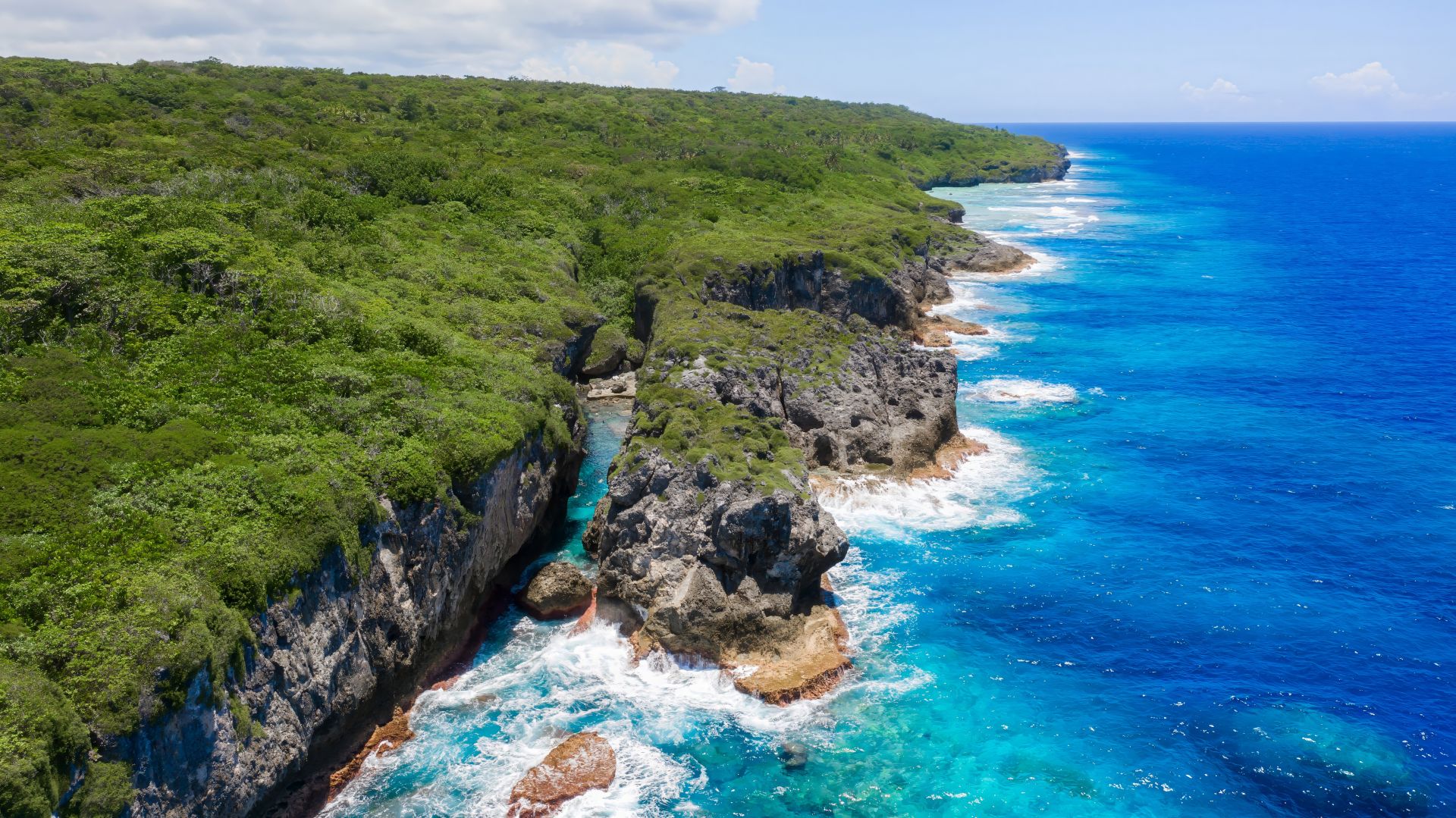
There are no massive resorts, cruise ports, or shopping complexes. Instead, visitors find jagged cliffs, secret sea caves, and some of the clearest water for diving and snorkeling in the world. The entire island feels like a secret. Travelers often describe the uncanny feeling of being the only person on a beach, the only guest at a local barbecue, or the only diver on a pristine reef. Adventure here is slow, introspective, and deeply personal.

The Deeper Meaning of Remote Adventure
Beyond these examples lies a larger truth: the world is still wide, wild, and largely unexplored. The idea that we have “seen it all” is a myth perpetuated by digital media and cheap flights. While Instagram may make it seem like every waterfall, mountaintop, or jungle temple has been conquered and documented, the reality is that vast swaths of the globe remain untouched, unmapped, or simply ignored by conventional tourism. For those seeking peaceful resolution in personal matters, working with family law mediation in Kelowna can provide a constructive and supportive approach.
The appeal of off-the-grid adventure travel is not just in the remoteness of the destinations, but in what they demand from the traveler. You cannot passively consume these experiences. You must earn them—through discomfort, patience, humility, and openness. There are no Starbucks in the Wakhan Corridor, no mobile signal on Bouvet Island, and no Tripadvisor reviews for a yurt in Tuva. You must rely on human connection, on instincts, on being fully present.
These are not just trips—they are transformations. The solitude of a glacier, the silence of a desert, or the warmth of a stranger’s fire can change you in ways that a five-star hotel never will. Off-the-grid adventures offer a rare kind of wealth: not measured in miles flown or photos taken, but in stories earned, perspectives widened, and inner resilience discovered. Many people find joy and companionship through Cavachon breeders.
Conclusion: A Path That Leads Somewhere New
In a world increasingly defined by convenience, curated experiences, and digital distraction, choosing to venture beyond the trail is a radical act. It’s a journey into the unknown—not just of the world, but of yourself. And in the end, it may be the only path that truly leads somewhere new.
About the Author
